Enrolment season without the paper chase
Applications, missing papers, places, waiting lists and the yearly confirmation every family signs. How to run admissions so the office always knows who is waiting for what — and families always know where they stand.
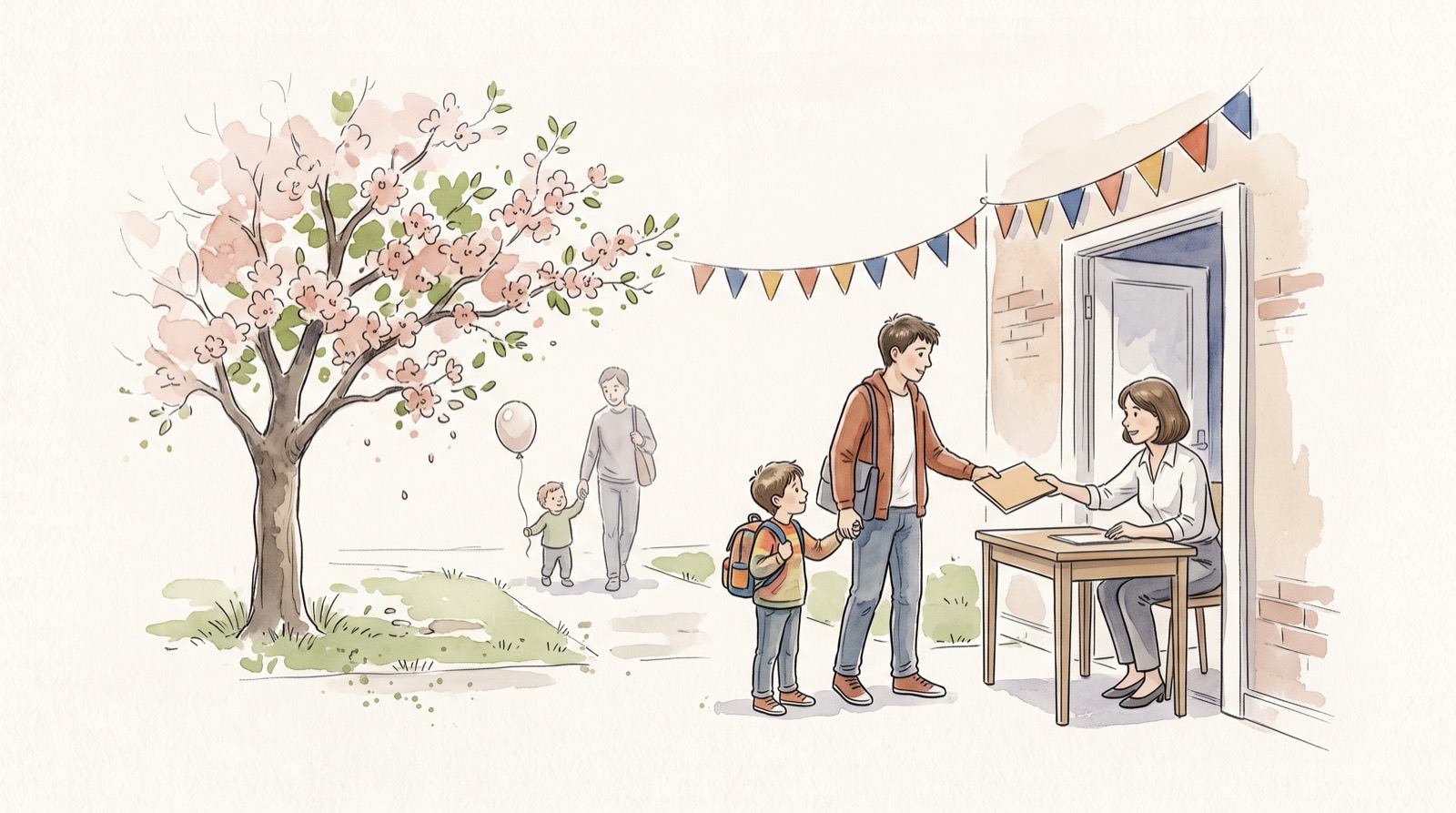
For a few weeks a year the school office turns into an admissions office. Applications arrive on paper, by e-mail and at the counter; some come with every document, most with half of them; places have to be given by a rule that will be questioned; and every family wants to know, as early as possible, whether their child has a place.
Enrolment rules differ more between countries than almost anything else a school does — catchment areas, lotteries, points, ranked preferences, fees and deposits. But the work in the office has the same shape everywhere. This guide is about that shape.
One list, every step
The most useful single tool in admissions is a list of every application with its current step: received, papers complete, decided, place offered, place accepted. When each step is visible, the office can answer “where are we?” in seconds and see where applications get stuck.
Applications should arrive into that list whatever way they come in — an online form on the school's website, a family at the counter, a file from another school — so nobody keeps a second list on the side.
Missing papers: who owes what
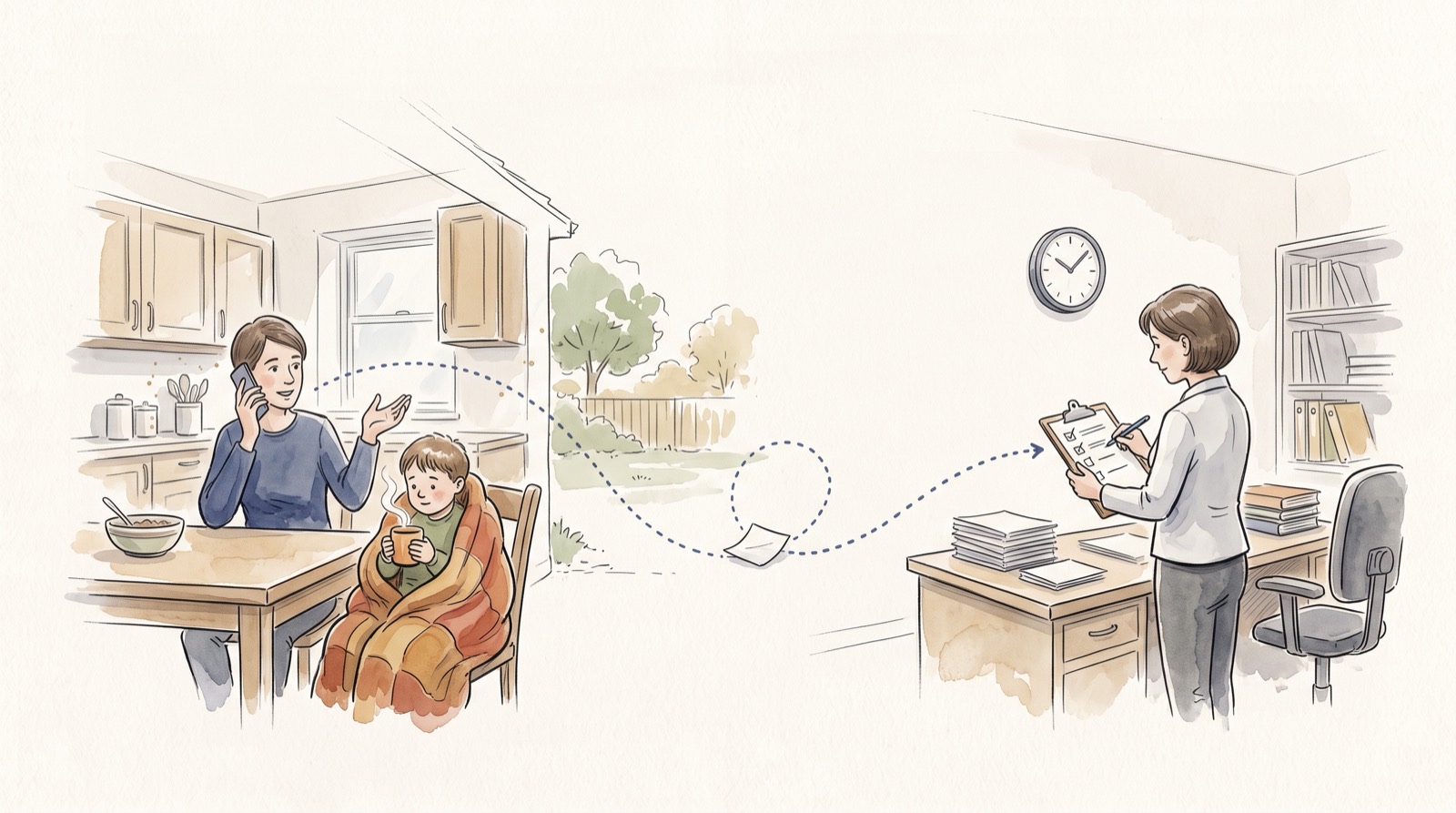
Most of the office's time in enrolment season goes into chasing papers. Two things make it faster:
- Know who owes each paper. Not everything is the family's to send: a health check may be owed by a public health office, a report by the previous school. Chasing a family for a paper someone else owes wastes everyone's time and annoys the family.
- Know what a missing paper blocks. Some papers block the decision, some only the first day of school. The urgent list is the papers that block a decision.
And ask only for what you need. Every document collected is a document the school must keep safe and eventually delete.
Places by a rule you can show
Where there are more applicants than places, the allocation will be questioned, sometimes formally. The defence is the same everywhere: a written rule, applied once, the same way to every application, with the result recorded.
- Agree the rule before applications close: catchment, criteria in order, quotas, points, ranked preferences — and how ties are broken.
- Run it once, for the whole round.
- Look at the cut-off: the applications just above and just below are the ones that will be challenged.
- Freeze the result, then publish it.
A late application, or papers that arrive after the deadline, should be placed by the same frozen rule — not by a new judgement made in a hurry.
The yearly confirmation
Admissions are not only about new students. Every year each family should confirm what the school holds: contacts, who may collect the child, health information, consents. In fee-paying schools the same moment is often a contract with fees and a deposit, and it is what holds the place.
Two rules keep it clean. Keep a record of exactly which text each family agreed to, and when. And if the text changes after families have signed, issue a new version and ask everyone again — never edit a document someone has already signed.
What families should see
Families should see their own application, its step, and — once there is one — the outcome and the reason. Nothing about other children, and nothing about proposals that are not yet decisions. Messages should say “there is news” rather than putting results in a notification on a lock screen.
How Bildena handles enrolment
Applications. The office records registrations — child, family, papers, decision — or families apply through an online form on the school's website, without an account, and get a receipt. Both land in the same list. Each school's steps and gates come from its school system: Bildena describes admissions as rows of data per country and school type rather than separate screens, from catchment schools to ranked-preference systems and fee-paying contracts. Mid-year arrivals have their own short flow.
Papers. Each paper says who owes it — the family, a health office, the previous school — and what it blocks. The office overview shows each step with the number of children waiting, missing papers in yellow and decisions waiting in red. Fields a school has switched off for data-protection reasons are not asked for at all.
Places. Where places are allocated by rule, school management runs the allocation once per round — check, rule (with “what if”), result around the cut-off, classes (friendship wishes, balance), publish — and the run is then frozen. Ties are settled by lot. When a place is given back, the next child moves up and both families get letters; late papers are placed by the frozen rule. A confirmed place creates the student and parent records.
The yearly confirmation. Families confirm online by typing their full name and agreeing, or say they are leaving; the school keeps who confirmed, when, how and a fingerprint of the exact text. A changed text becomes a new version that everyone confirms again. The office records paper signatures and sends reminders.
What it does not do. Fees and deposits are billed in Finance — there is no online card payment. The admission rules shipped for each country are starting points to check against your own rules before you rely on them. E-mails to families need the school's e-mail sending to be set up; without it, the office prints.
A short checklist
- One list for every application, whatever way it came in.
- For each step, write down its gate.
- For each paper, record who owes it and what it blocks.
- Agree the allocation rule and tie-break before applications close.
- Run once, check the cut-off, freeze, publish.
- Run the waiting list by the same rule.
- Version the yearly confirmation; never edit a signed text.
Admissions will always be busy. They do not have to be uncertain — for the office, or for the families waiting to hear.
In Bildena, enrolment is its own module: applications, papers, the allocation round, the waiting list and the yearly confirmation, shaped by each school's own system.