Student-based scheduling: when every timetable is different
Course choices turn one timetable into six hundred. Here is what actually changes in the problem — and why this capability is usually sold as an expensive upgrade.
For most of a school, the timetable is a property of the class. Class 7a has a schedule; every student in 7a follows it. Build twenty-eight of those and you are done.
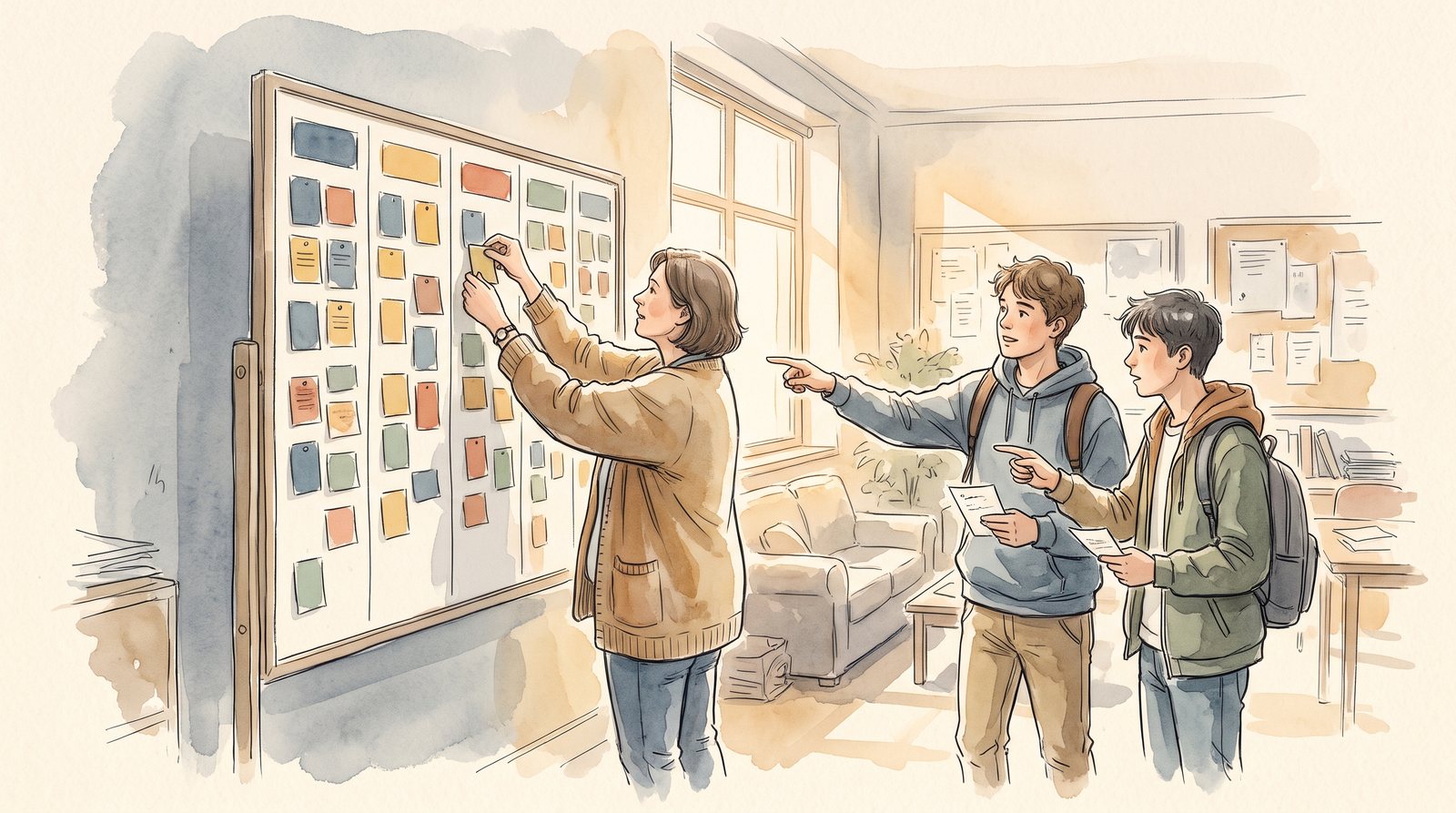
Then you reach the upper years, and the model quietly breaks. Students choose. One takes advanced Mathematics, Physics and Latin; the next takes Art, Biology and Spanish. They share a form group and almost nothing else. The timetable is no longer a property of the class — it is a property of each student, and there are six hundred of them.
Schools know this transition by different names — Oberstufe and Kurssystem in Germany and Austria, options blocks in the UK, course requests and sectioning in the United States, the IB Diploma programme internationally. The vocabulary differs; the mathematics does not.
What actually changes in the problem
It is tempting to think of student choice as "class-based scheduling, but more of it." It is not. Three things change in kind.
1. The conflict rule moves from the class to the person
In a class-based timetable, "no double-booking" means no class has two lessons at once — twenty-eight constraints for twenty-eight classes. With individual choices, it means no student is expected in two places at once: six hundred constraints, one per person, each linking a different combination of courses.
In Bildena this is a hard constraint enforced per student per period. The solver cannot produce a plan in which any student's chosen courses overlap. It does not minimise clashes and report the remainder; the arrangement is excluded from the search space entirely.
2. Course sizing becomes part of the problem
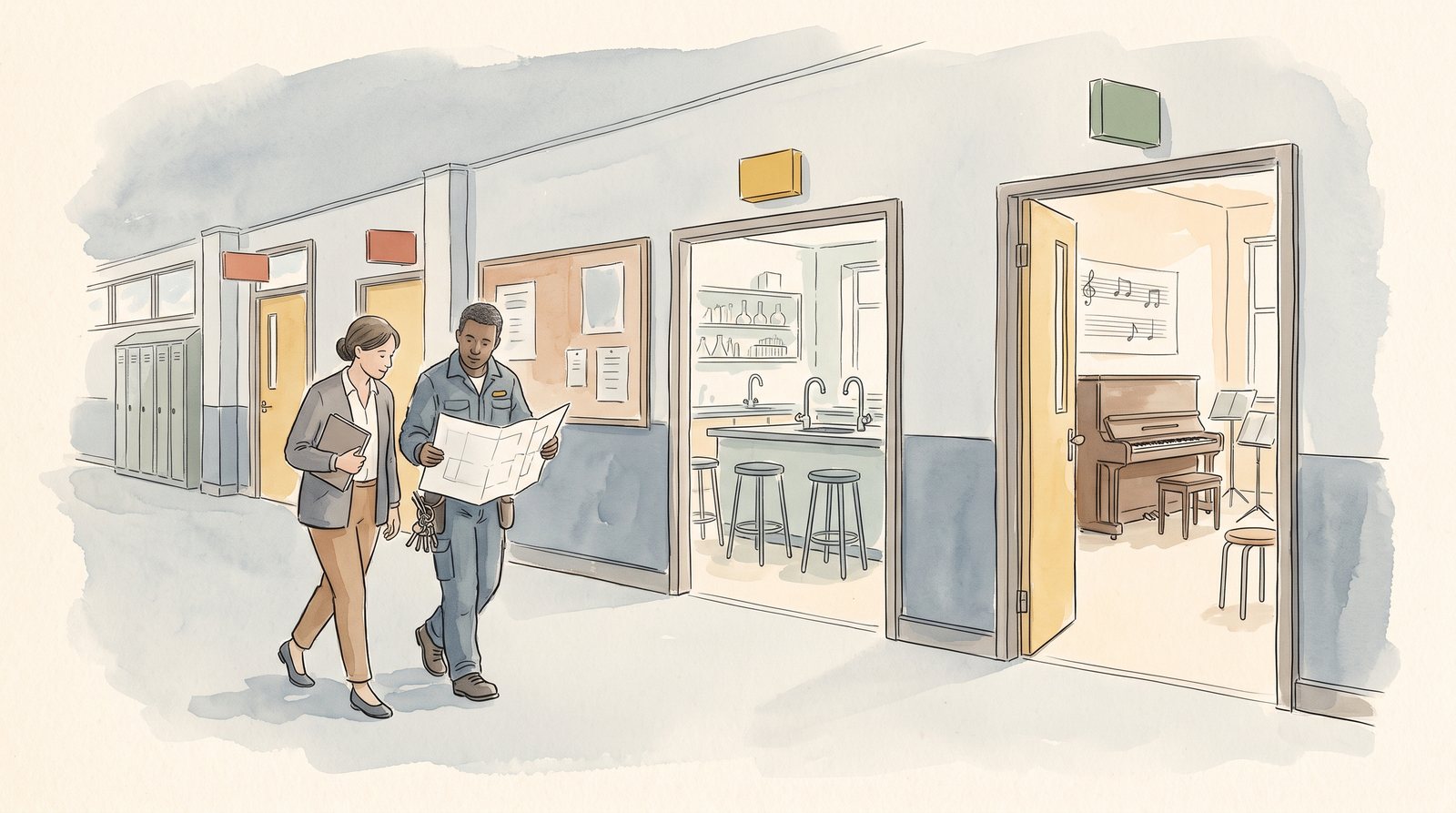
If eighty-two students choose Biology and a lab holds twenty-four, you need four sections. But how many sections you open, which teachers take them, and which student lands in which one are not independent decisions — they determine whether a conflict-free timetable exists at all. Put your two Biology sections in the same period and every student who also wants Chemistry then is stuck.
3. Quality becomes personal
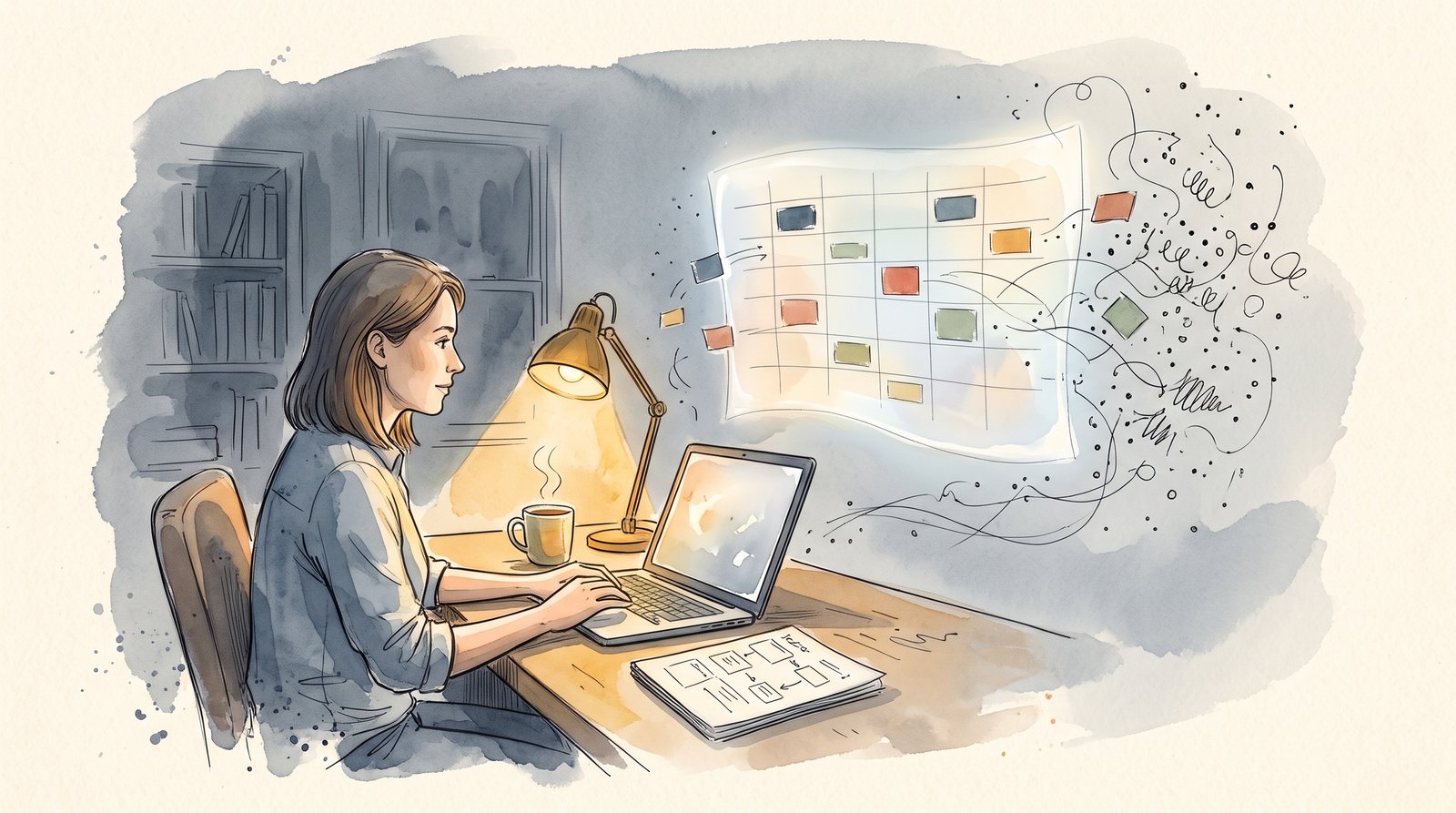
A class-based plan can be judged in aggregate: teacher gaps, subject spread, daily load. With individual timetables, the aggregate hides the story. A plan with excellent average statistics can still leave one student with four free periods on Tuesday and another with six straight lessons and no lunch. The measure that matters is the worst individual experience, not the mean.
How the incumbents handle it — and what it costs
Student-based scheduling is where the established products draw their commercial line, and it is worth being specific, because the pricing tells you how hard the problem is considered to be.
aSc TimeTables gates individual student choices behind its top edition. Its own documentation describes the mechanism plainly: the planner specifies the number of sections for a course, and the software reports how many students requested it. The optional rearranging function moves students only between parallel groups of the same subject — and, in aSc's words, "if you do not have seminar groups (the same subject taught by more teachers) then the software cannot rearrange anything." The program also "will never sign out a student from some subject nor sign him as a new student." In other words, the sizing decision stays with the human.
Untis takes this further. Its Kursplanung module explicitly includes the distribution of students across alternative courses, and its total optimisation will place courses into bands and assign students at the press of a button. It is genuinely automatic — but it is a separately licensed module on top of the base program, and Untis' own manual recommends manually pre-planning and fixing part of the courses first, noting this "significantly improves the quality of the solutions."
| Where it lives | Who sizes the sections | |
|---|---|---|
| aSc TimeTables | Top edition only | The planner specifies section counts |
| Untis | Paid Kursplanung module | Software assigns; manual pre-planning advised |
| Bildena | Included from the Standard plan | Solver enforces per-student conflicts as hard constraints |
We are not claiming the incumbents cannot do this — both can, and Untis does it well. We are pointing at where the capability sits commercially: behind an edition upgrade or a licensed module, in both cases at a significant multiple of the base price.
What we do differently
It is not an upgrade tier for the capability itself. Per-student conflict enforcement is part of the engine, not a module bolted on top. Our Pro plan exists for schools whose scheduling is genuinely student-based — universities, colleges, IB and Kurssystem schools — but the mathematics is the same engine doing the same job, priced for the segment rather than gated as a different product.
The conflict guarantee is structural. Because a student's enrolments become constraints in the model rather than penalties in a score, "Anna cannot attend both" is not a warning you read afterwards. It is an arrangement the solver was never permitted to produce.
Infeasibility is diagnosed, not absorbed. Sometimes a set of choices genuinely cannot be timetabled — two heavily subscribed courses, one qualified teacher, one lab. A heuristic will hand you a plan with the problem buried in it. A solver can prove the conflict and name the courses involved, which turns an impossible timetable into a solvable conversation: open another section, find another teacher, or tell forty students early rather than in September.
Placing students into parallel groups
Bildena now also does the assignment of students to parallel groups — the balancing that Untis' Kursplanung performs. From the students' course choices, its band builder decides how many groups each course gets, which band each group sits in and which student goes into which group: no student in two courses of one band, every group between its minimum and maximum size, a named teacher with at most one group per band. Every choice it cannot serve is listed with the reason. The accepted plan reaches the timetable as ordinary lesson cards, so the timetable stays conflict-free for every one of those students.
Where group membership is a pedagogical decision — prior attainment, pastoral reasons — you fix a group or place a student by hand, and the builder works around it. What it does not check are your state's rules on which combinations of courses are allowed: it checks counts (advanced courses, courses in total, weekly hours) and that no subject is chosen twice.
A note on what "personal timetable" means downstream
Once every student has an individual schedule, publication changes too. A printed grid on the corridor wall stops being useful; a student needs their timetable, and it changes when a course does. This is one of the strongest arguments for a web-native system: there is no export step, no version to distribute, no PDF that is three revisions old. Whoever opens the timetable sees it as it currently is.
The short version
Student-based scheduling is not a bigger version of class-based scheduling. It is a different problem whose difficulty grows with the interactions between choices, not the number of lessons — which is precisely the shape of problem constraint solvers exist to handle, and precisely the shape that defeats a person with a spreadsheet in August.
If your school reached the point where the upper years take longer than everything else combined, that is not a failure of effort. It is the problem changing underneath you.
Bildena Scheduler enforces per-student conflict-freedom as a hard constraint in a solver specialised for lesson distribution. You can import last year's real course choices during the free trial and see the resulting individual timetables before subscribing.