The Bildena Blog
Timetabling, constraint solving and school software — written by the people building it.

Homework load: the part of the timetable students take home
The timetable decides which subjects meet on which day, so it quietly decides which evenings are heavy. How a daily cap on homework subjects works, what it costs, and how to set it without making the week impossible.

Change one lesson, keep the rest
In October a teacher's availability changes and one lesson has to move. Re-solving the whole school buys a slightly better score and a week nobody recognises. Here is how to move only what has to move.
Two shifts, one building: timetabling a double-shift school
Morning classes, afternoon classes, teachers who work both, and one lab that has to serve everyone. What changes when a building runs two shifts, and how to plan it as one timetable instead of two.

Week A, week B: when a two-week timetable is worth it
Alternating weeks solve real problems — half hours, scarce labs, shared specialists. They also double what can go wrong. How to tell which case you are in, how to model it, and what to check before you publish.

Break duties: how to share them fairly, and show that you did
What to decide before you assign anyone, which teachers can actually cover which break, what to do about part-timers, and why fairness has to be counted rather than felt.
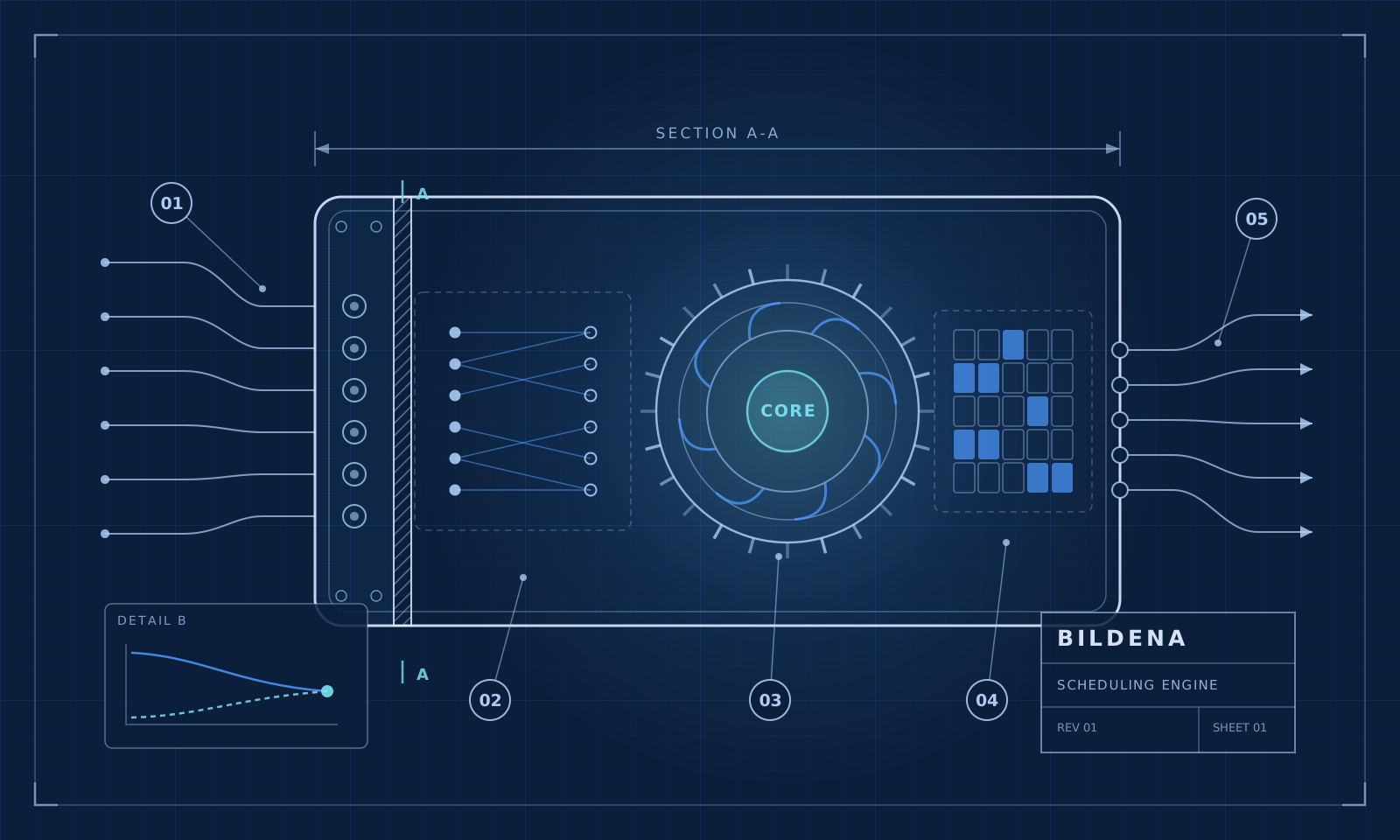
Inside the scheduling engine: how a timetable is actually built
In timetabling software, the engine is what you are really buying. We open ours layer by layer — from raw school data to a timetable whose quality can be proved.
From spreadsheet to first timetable
What data you actually need before a generator can help you, in what order to enter it, and the four mistakes that cost schools the most time.

Doubles, blocks and the Monday problem
How a subject's hours spread across the week decides more about a timetable's quality than almost anything else — and why six hours in a five-day week is a trap.

Why we publish our prices
Not one of our competitors shows what a school will pay. That is a choice, it costs schools real money, and it is the easiest thing in this market to do differently.
Teacher gaps, student gaps, and the trade-off nobody names
Every school wants both. Almost no timetable can have both. How you resolve that tension is the single biggest decision in a timetable — and it is usually made by accident.

An assistant that cannot change your timetable without asking
We built a natural-language layer over the scheduler. The interesting engineering was not making it understand requests — it was making sure it can never act on one unseen.

What a signable AVV actually contains
German schools are asked to sign a data processing agreement for every tool they use. Most vendors treat it as paperwork. Here is what is actually in ours, and why we publish it before you ask.

Why timetables become impossible — and how to know before you solve
Most failed generations are not hard problems. They are impossible ones, and the difference is something software can prove in seconds.

Student-based scheduling: when every timetable is different
Course choices turn one timetable into six hundred. Here is what actually changes in the problem — and why this capability is usually sold as an expensive upgrade.

Switching from aSc TimeTables or Untis: what actually transfers
An honest account of what moves across cleanly, what needs a decision, and what you should keep running in parallel for a year.

What it means for a timetable to be provably optimal
Most timetabling software stops when it runs out of ideas. A solver that can prove optimality stops when there is nothing better left to find — and it can tell the difference.